Automate the workflows slowing your operations down.
We work with heads of operations to find the processes worth automating, build them into the systems you already run, and measure the result against what the manual version costs you today.
We have worked with 40+ partners to automate operational work and build AI-assisted workflows around the systems they already run.
40+partnersoperations teams we have worked with to automate manual work and build AI-assisted workflows.
Enterprise fintech
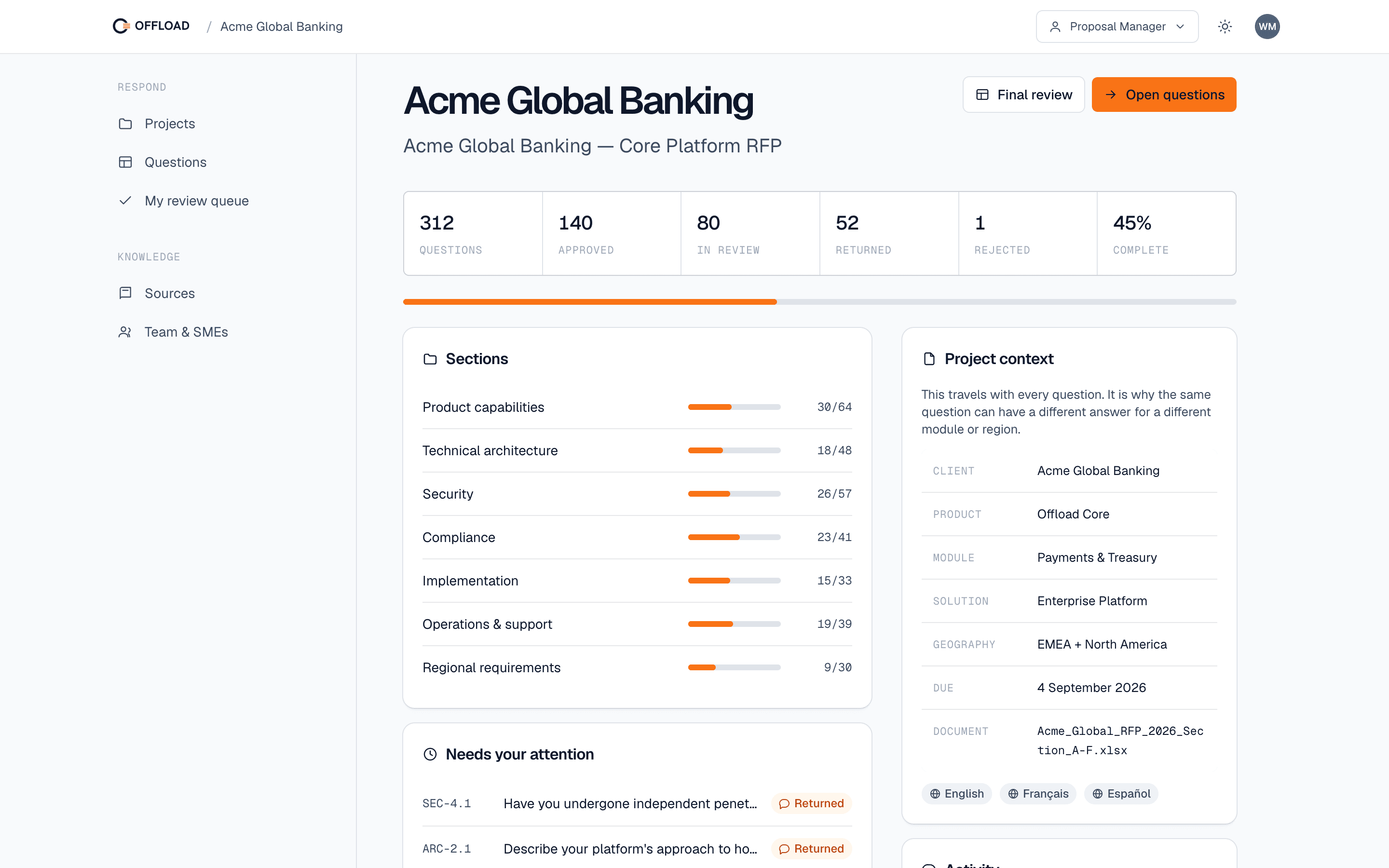
Complex RFPs without the copy-and-paste workflow
Proposal Managers were coordinating hundreds of questions across internal experts, previous answers and customer spreadsheets. We brought the drafting, review and document completion into one controlled workflow.
Industry
Financial services technology
Environment
Client-controlled Azure
Interfaces
Web app + browser extension
Document scale
RFPs beyond 300 pages
Approved company knowledge available at the point of drafting
SME review, comments and approvals managed in one place
Approved responses returned to the customer’s original file
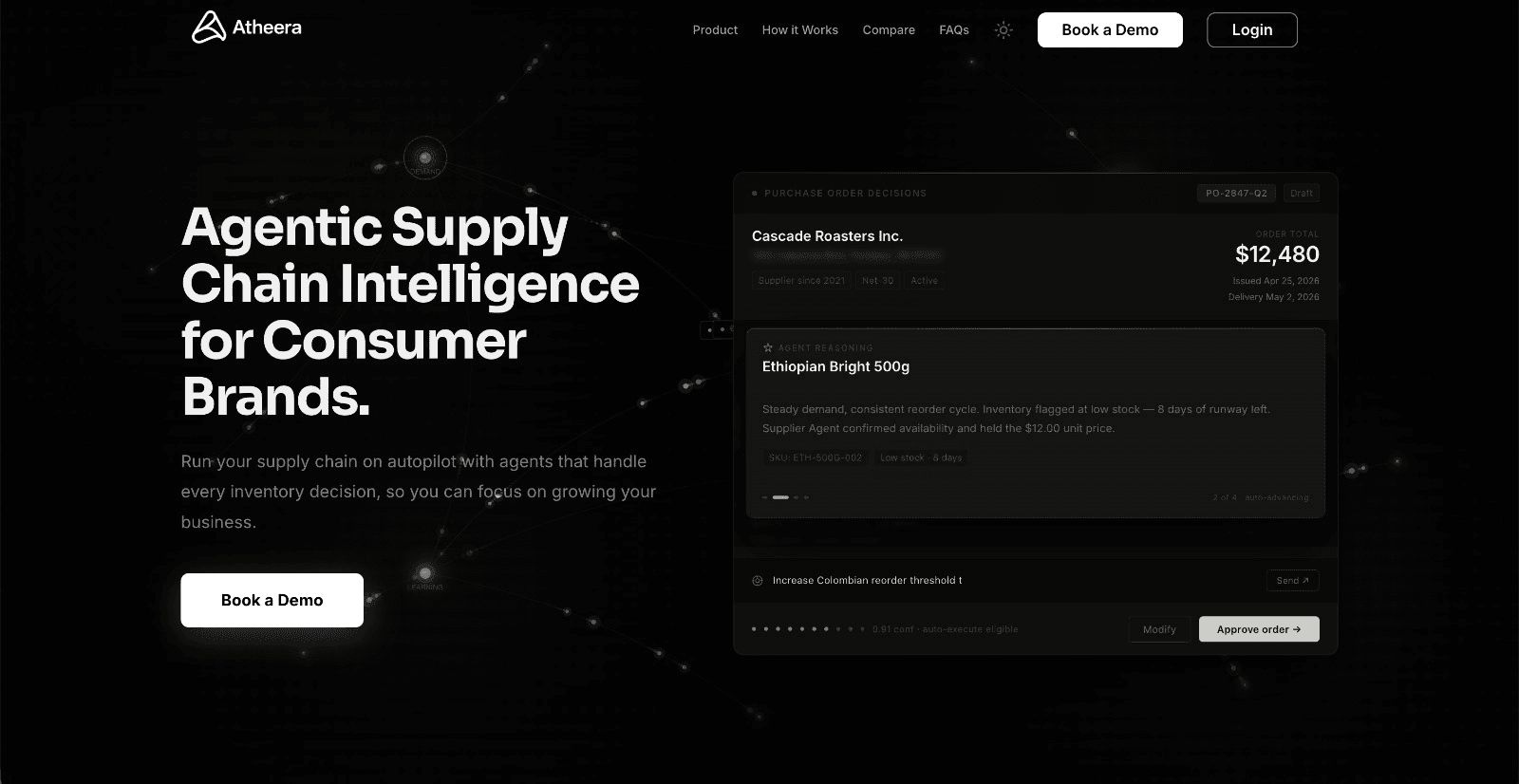
From fragmented retail data to a purchase order ready for review
Weekly reorder planning depended on sales, inventory and supplier information spread across Shopify and spreadsheets. We brought that data into one reviewable path from validation to purchase order.
Industry
Retail and e-commerce
Engagement
Inventory decision workflow
Primary source
Shopify plus manual uploads
Output
Editable purchase orders
Data-quality issues surfaced before forecasting
Every recommendation included reasoning and confidence
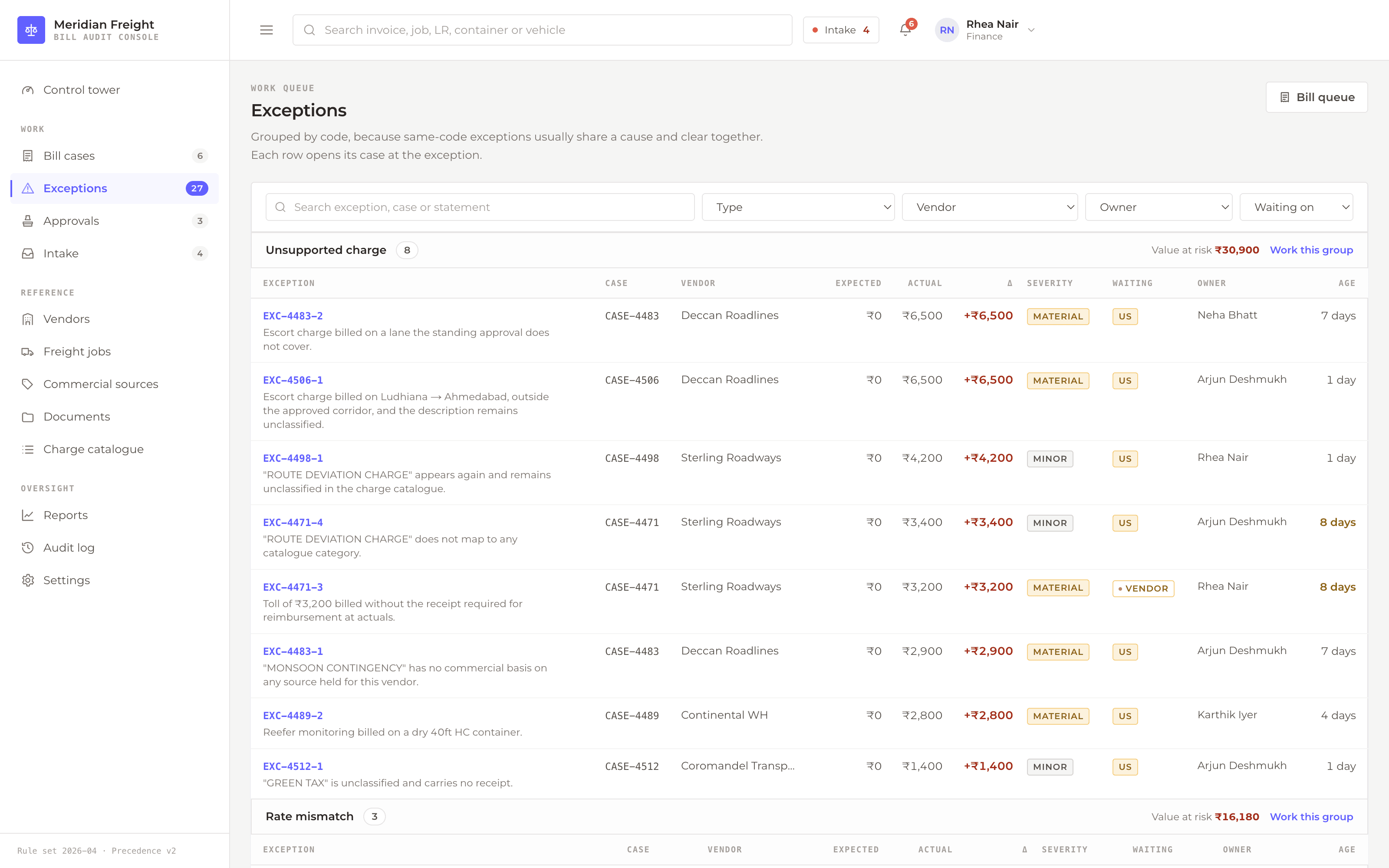
Checking freight bills without investigating every invoice by hand
Finance had to reconstruct the shipment, agreed rate and supporting paperwork before approving a vendor invoice. We brought that investigation into one workflow and sent only genuine exceptions to a person.
Industry
Freight and logistics
Engagement
Finance workflow automation
Integration
Layer over existing systems
Human control
Financial approvals stayed with the team
Every bill checked against shipment and commercial evidence
Clean bills separated from cases needing attention
Each exception carried its evidence, next action and owner
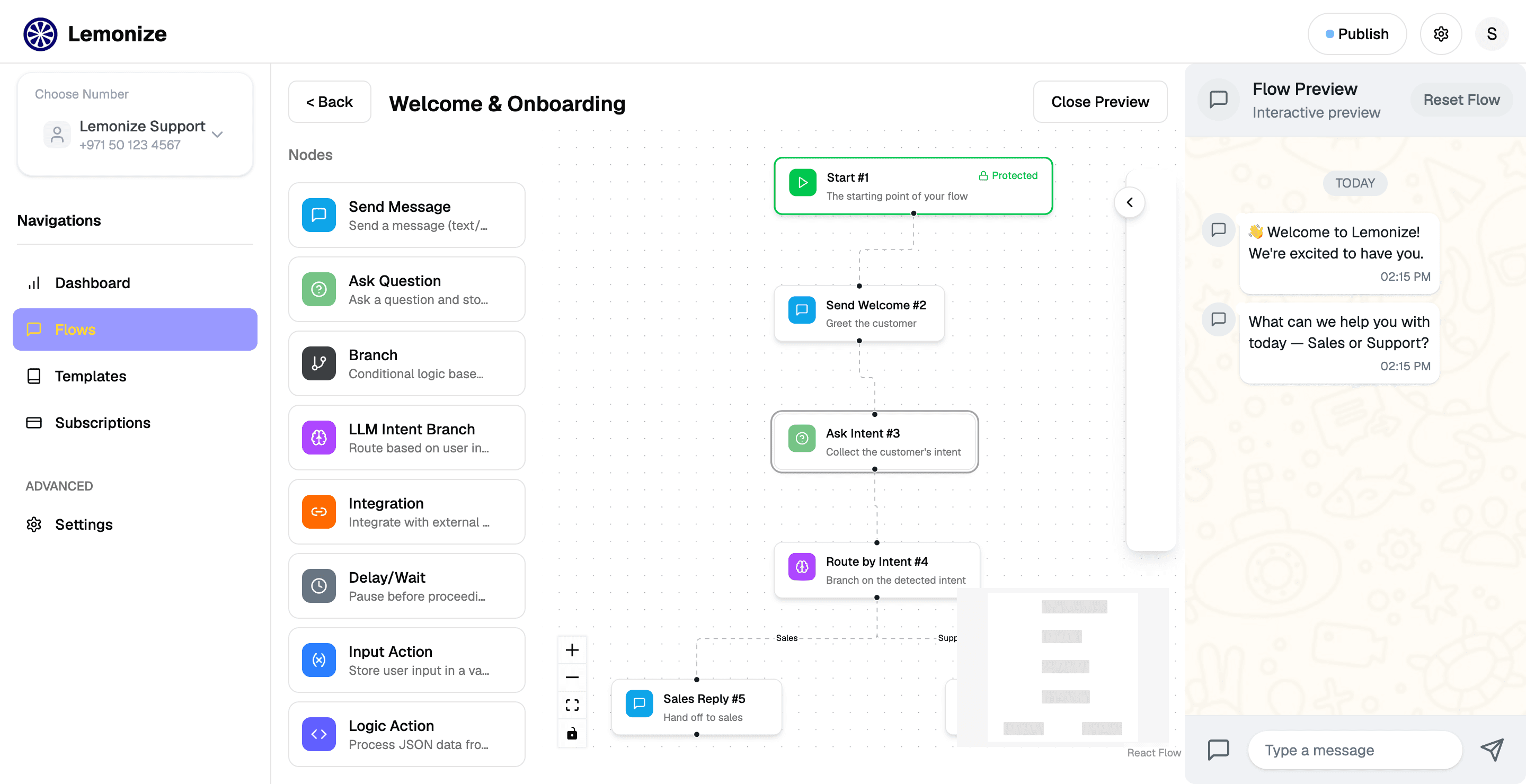
One operating layer over the channels an agency used every day
Lemonize’s daily work lived inside external platforms. We first made WhatsApp conversations easier to build and test, then brought campaign operations across Meta, Snapchat and TikTok into one place.
Industry
Digital advertising agency
First workflow
WhatsApp conversation builder
Second workflow
Cross-platform advertising operations
Approach
Add an operating layer, not another channel
WhatsApp flows built visually and previewed before launch
Campaigns across three advertising platforms managed together
Reporting data refreshed without manual per-platform exports
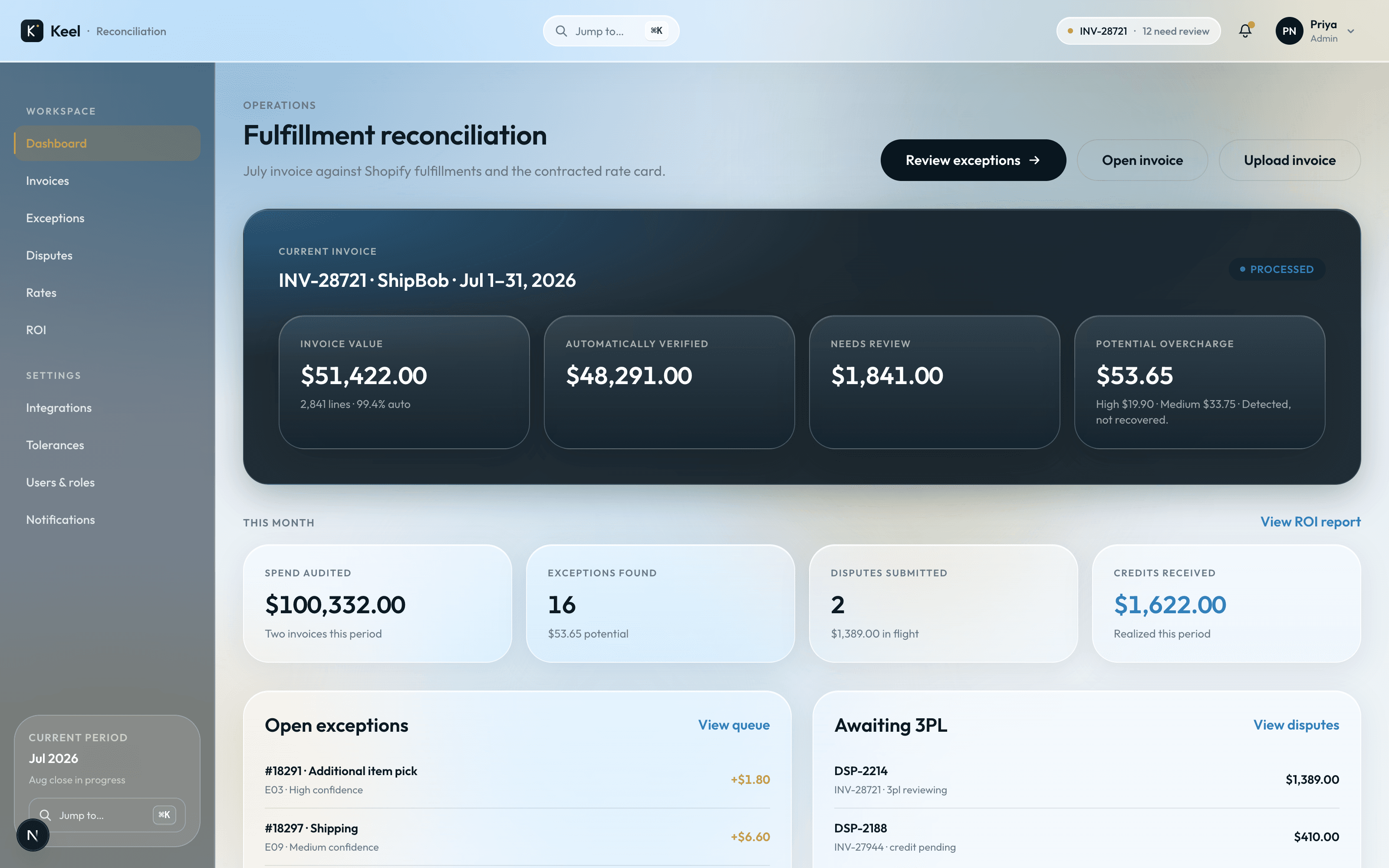
Turning thousands of 3PL charges into a focused review queue
A monthly fulfilment invoice contained thousands of lines that could only be verified against orders, shipments and contracted rates. Keel checked every line and brought only the genuine discrepancies to finance.
Industry
E-commerce
Systems
Shopify, ShipBob and contracted rates
Engagement
Fulfilment reconciliation platform
Measured on
Credits received, not amounts flagged
Every invoice line checked against what actually shipped
Reviewers saw the evidence behind each discrepancy
Approved findings became organised dispute packages
Your best people shouldn’t spend their week keeping inefficient processes alive.
OFFLOAD is our seven-stage method for identifying what should be automated, proving the return before we build, and making the result work reliably in production.
O
Observe
Understand the work as it really happens.
F
Find
Identify the friction worth removing.
F
Feasibility
Prove the value before committing.
L
Lay Out
Design the future workflow.
O
Orchestrate
Connect systems, rules, data and AI.
A
Activate
Put it to work with the team.
D
Drive
Measure, maintain and improve.
The result: fewer manual handoffs, fewer preventable errors, and more capacity without adding operational overhead.
Anyone can build an automation.
Your internal team can too. The difference is what happens before and after the build.
How Offload's approach differs from a typical automation agency, across five stages of an engagement.
Other automation agencies
Offload
Often starts with a defined automation requirement
Starts with the process, working across stakeholders to understand what should actually change
Typically engaged once an automation has already been decided
Automation is not assumed to be the answer. Sometimes the process can be improved without building something new
May introduce additional tools, platforms or preferred technology
Works with your existing infrastructure wherever practical
Success is often centred around delivering the agreed scope
Defines success criteria before implementation
Measurement and ROI tracking may sit outside the engagement
Tracks the operational outcome after launch to understand whether the change actually created value
What the teams we worked with say.
Given to DreamLaunch, the studio Offload is part of.
Working with Harshil and DreamLaunch to build my automation builder MVP was great. They didn't just code what I asked for. They built a solid foundation that I can actually scale from. If you need a technical partner who understands both the build AND the business side of early-stage products, I'd highly recommend DreamLaunch.
AndrejFounder, Mizu AI
DreamLaunch took our AI RFP automation product from a rough MVP all the way to a production-ready enterprise solution. They understood the complexity of what we were building (the scale, the edge cases, the enterprise requirements) and delivered at every stage. Couldn't have asked for a better technical partner for this.
RohitFounder, Humano
Really enjoyed working with DreamLaunch Studios. I truly appreciate how you take ownership of tasks and consistently meet deadlines. When I was looking for a teammate, this was exactly what I needed and you deliver every time.
Prajwal TomarFounder, IgnytLabs (exited: $5M)
FAQ
Frequently asked.
We do not expect trust upfront. We earn it by starting with a clearly defined process, agreeing on measurable success criteria before implementation, and keeping the work transparent throughout.
We work within your existing environment wherever possible, involve your stakeholders, and measure the outcome after launch so you can judge the project on results, not promises.
We estimate ROI using the actual cost of running the process today.
We work with the teams involved to understand and validate the man-hours required, along with the cost of delays, errors, missed opportunities, and reliability issues. This gives us a baseline against which the expected improvement can be measured.
Before implementation, we agree on the success criteria and the metrics that need to improve. After launch, we track those same metrics to see whether the expected value is actually being created.
The final ROI depends on the accuracy of the initial information, how well the solution performs, and how consistently it is adopted by the teams involved. Measuring and achieving that ROI is therefore a joint effort between Offload and your team.
You may not need us to replace your internal team. We work alongside them.
Internal technology teams already have their own priorities and roadmaps. Our role is to focus on the process, work with the people involved, identify what is worth improving, and take that work through implementation and measurement.
Your internal team continues to manage your existing technology. We focus on making the selected process better and work with them wherever their involvement is needed.
We do not assume we already know how your process works.
We learn it by working with the people on your team who run it, reviewing the existing SOPs and systems, and understanding the different steps, handoffs, exceptions, and decisions involved.
We then map the process and validate our understanding with your team before recommending or building anything.
Your team brings the knowledge of how the business works. We bring the structure to turn that knowledge into a process that can be improved and, where it makes sense, automated.
In most cases, no.
We focus on building automations that work with your existing systems and infrastructure wherever possible. Introducing new infrastructure before the value of an automation has been proven usually adds unnecessary cost and complexity.
We first validate that the automation is creating the expected value. Once the ROI is clear, we can then look at whether deeper system changes or a more scalable setup would make sense.
This is a collaborative process.
We do not assume that we understand a business process better than the people who have been running it for years. We work with you and your team to understand how the process works today, why certain steps exist, where the problems are, and what success should look like.
At times, we may also question why a process is being done a certain way, especially if there is an opportunity to simplify it before automating it.
We will also need support from your internal technology team where access to existing systems, data, or infrastructure is required.
The goal is to get the right people involved at the right stages without creating unnecessary work for your teams.
Automations are software, and like any software, issues can occur.
We design the workflow with exception handling and clear fallbacks so that unusual cases can be flagged for human review rather than silently failing.
For the first month after launch, we provide 24/7 on-call support at no additional cost. During this period, we monitor issues, fix problems, and gather feedback from the teams using the automation.
After that, we can either hand over the automation to your internal technology team or continue managing and improving it on a retainer basis if the automation is delivering the expected value.
No. We want the automation to remain useful even if you decide not to continue working with us.
After the initial support period, we can hand over the automation, documentation, and relevant technical details to your internal technology team so they can manage it themselves.
If you prefer, Offload can continue monitoring, maintaining, and improving the automation on a retainer basis.
The choice remains with you.
Book a call
Bring one process. We will tell you whether it is worth automating.
No deck, no discovery phase, no obligation. If the honest answer is that software will not pay for itself here, that is the answer you will get.