Freight and logistics
Checking freight bills without investigating every invoice by hand
We automated the repetitive investigation around freight invoices while keeping financial approval with the people responsible for it.
The story in 30 seconds
- Before
- Finance could not tell whether a freight invoice was safe to approve without finding the shipment, the applicable rate, any commercial override and the required paperwork across several systems and inboxes.
- What changed
- A workflow that matches each invoice to its shipment, checks individual charges against the available commercial evidence and either clears the bill or creates a specific, owned exception.
- After
- The finance team could begin with the outcome of the investigation instead of repeating it from scratch. Clean bills moved forward, while uncertain or policy-sensitive decisions remained with the people authorised to make them.
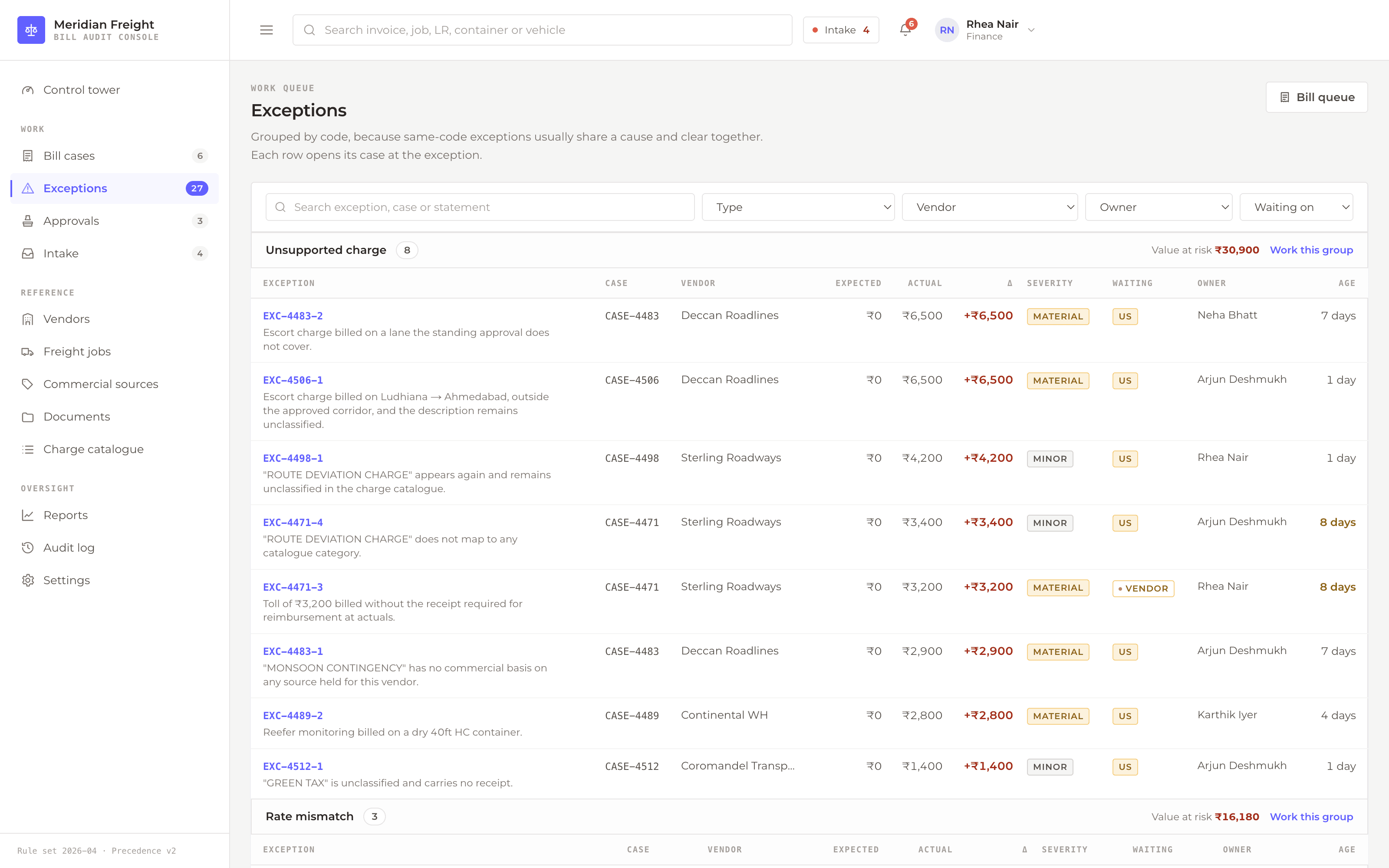
Before: approval began with an investigation
A freight invoice could not be checked by comparing its total with a purchase order. Finance first needed to know which shipment it belonged to, what rate applied, whether a special quotation had replaced the rate card and whether the documents supporting each charge were present.
Those answers were spread across freight records, spreadsheets, rate cards, email approvals and transport documents. If something was missing, the invoice often became another thread to follow rather than a case with a clear owner.
Invoice entry was not the bottleneck. Becoming confident enough to approve the invoice was.
A clear route from invoice to decision
We built a layer over the company’s existing freight and accounting systems. When an invoice arrived, it extracted the details needed for validation, checked for duplicates and matched the bill to the most likely shipment.
The workflow then evaluated each charge against the applicable commercial evidence and required documents. When the evidence was clear, rule-based calculations stayed deterministic. When it was incomplete or conflicting, the system created a review case rather than guessing.
The new workflow
- Receive the invoice
- Find the shipment
- Establish the agreed charge
- Check the evidence
- Clear or route
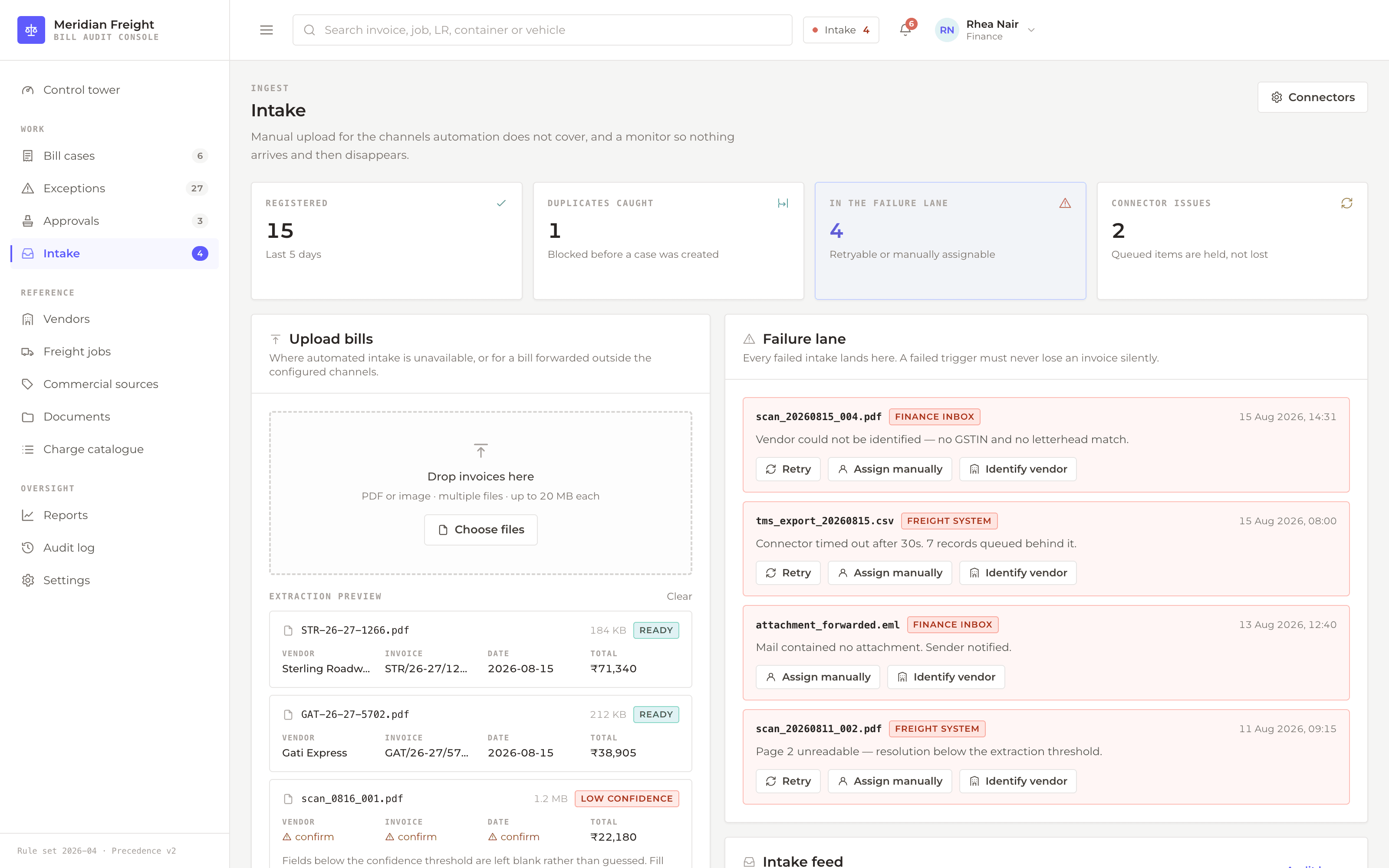
Knowing which commercial agreement actually applied
The correct price was not always the one in the standard rate card. A spot quotation, shipment-specific approval or email agreement could legitimately replace it. The workflow considered the vendor, lane, freight mode, date and recorded overrides before deciding what should have been charged.
Each conclusion retained the source behind it. Finance could see what was billed, what was expected, the difference between them and the evidence used to reach that answer.
The system did not simply say that a bill was wrong. It showed the commercial evidence behind the conclusion.
Only the right cases reached a person
Every invoice reached one of four understandable outcomes:
- Clear
- The invoice matched the available evidence and could continue to accounting.
- Resolvable
- The issue and next action were clear, such as requesting a missing document or revised invoice.
- Approval needed
- The facts were clear, but policy required an authorised person to decide.
- Investigation needed
- The evidence was incomplete or contradictory, so the case was assigned instead of guessed.
Each unresolved invoice remained a persistent case with its evidence, previous decisions, next action and owner attached. New information continued the case from the right point rather than restarting the investigation.
After: finance focused on decisions, not reconstruction
The resulting workflow checked every vendor bill and separated routine validation from work requiring judgment. Clean bills could move toward accounting, and genuine exceptions arrived with the relevant rule, evidence and next owner already attached.
Financial authority did not move to the automation. The system prepared the decision; the team retained control over approvals, overrides and ambiguous cases.
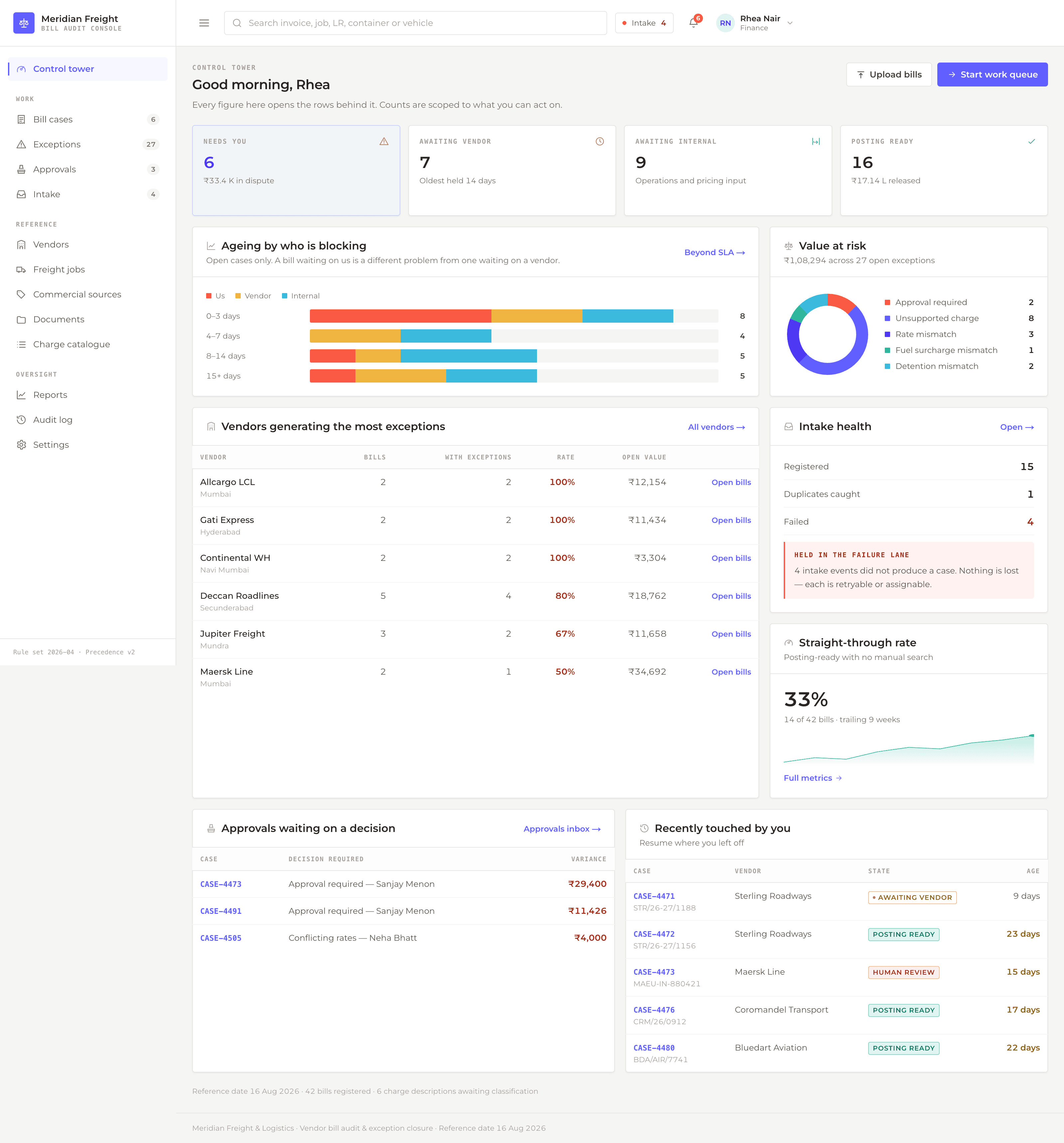
We did not automate financial judgment. We removed the manual investigation surrounding it.