Fieldstone Home
Turning thousands of 3PL charges into a focused review queue
Keel checks each charge against what shipped and what the contract allowed, then gives finance the evidence needed to review and recover genuine discrepancies.
The story in 30 seconds
- Before
- A monthly 3PL invoice could contain thousands of charges, each dependent on a different operational fact. Verifying them meant comparing the invoice with Shopify fulfilment data and the contract line by line, so most invoices could only be spot-checked.
- What changed
- A reconciliation platform that applies the contracted rules to every charge, clears the lines that agree and places the remaining discrepancies into a focused review queue with their supporting evidence attached.
- After
- Finance could start with the small set of charges needing attention instead of a spreadsheet containing every charge. Approved discrepancies could move into a documented dispute, and recoveries could be tracked through to credits actually received.
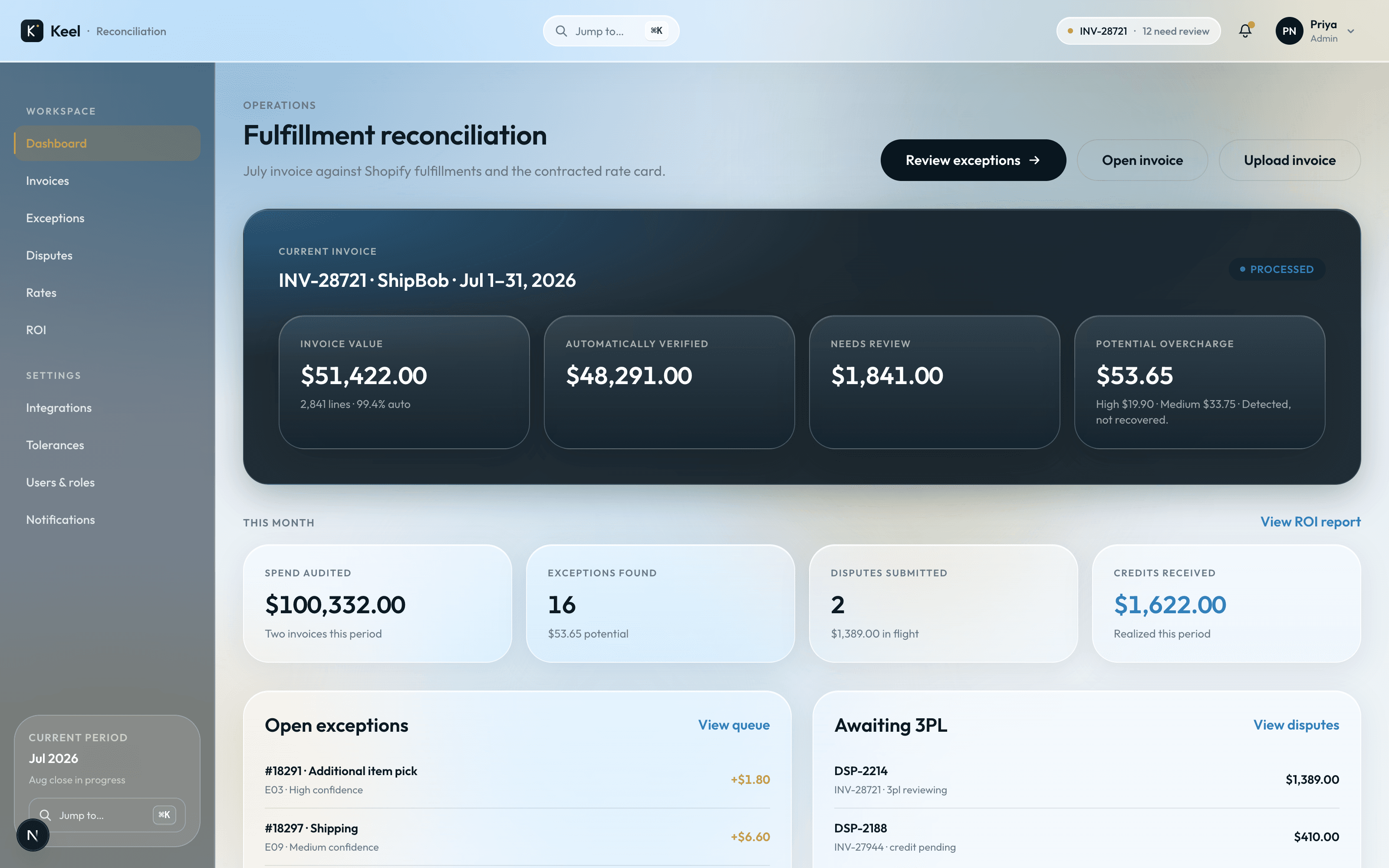
Before: finance could only inspect a fraction of the invoice
A 3PL invoice can contain thousands of lines for picking, packing, shipping, returns and surcharges. Each line has to be checked differently: a pick fee depends on units shipped, a return charge depends on whether the return was received, and shipping depends on zone, weight and service level.
Checking a charge properly meant holding three records together: what the 3PL billed, what happened in Shopify and what the contract allowed on that date. Doing that manually for every line was not realistic, so incorrect charges could pass unnoticed alongside correct ones.
The goal was simple: check every line without asking finance to investigate every line.
The screens below use demonstration data to show how the workflow operates. Their figures are not presented as measured client results.
Every charge checked in the same workflow
Keel turned the agreed rate card into dated rules, connected each invoice line to the relevant Shopify fulfilment and calculated what the charge should have been. Differences within an agreed tolerance cleared automatically; the rest moved forward for classification.
This gave the reviewer one place to see the invoice line, the operational event and the contract rule together.
The new workflow
- Import the invoice
- Match the fulfilment
- Apply the contracted rule
- Clear or flag
- Review the evidence
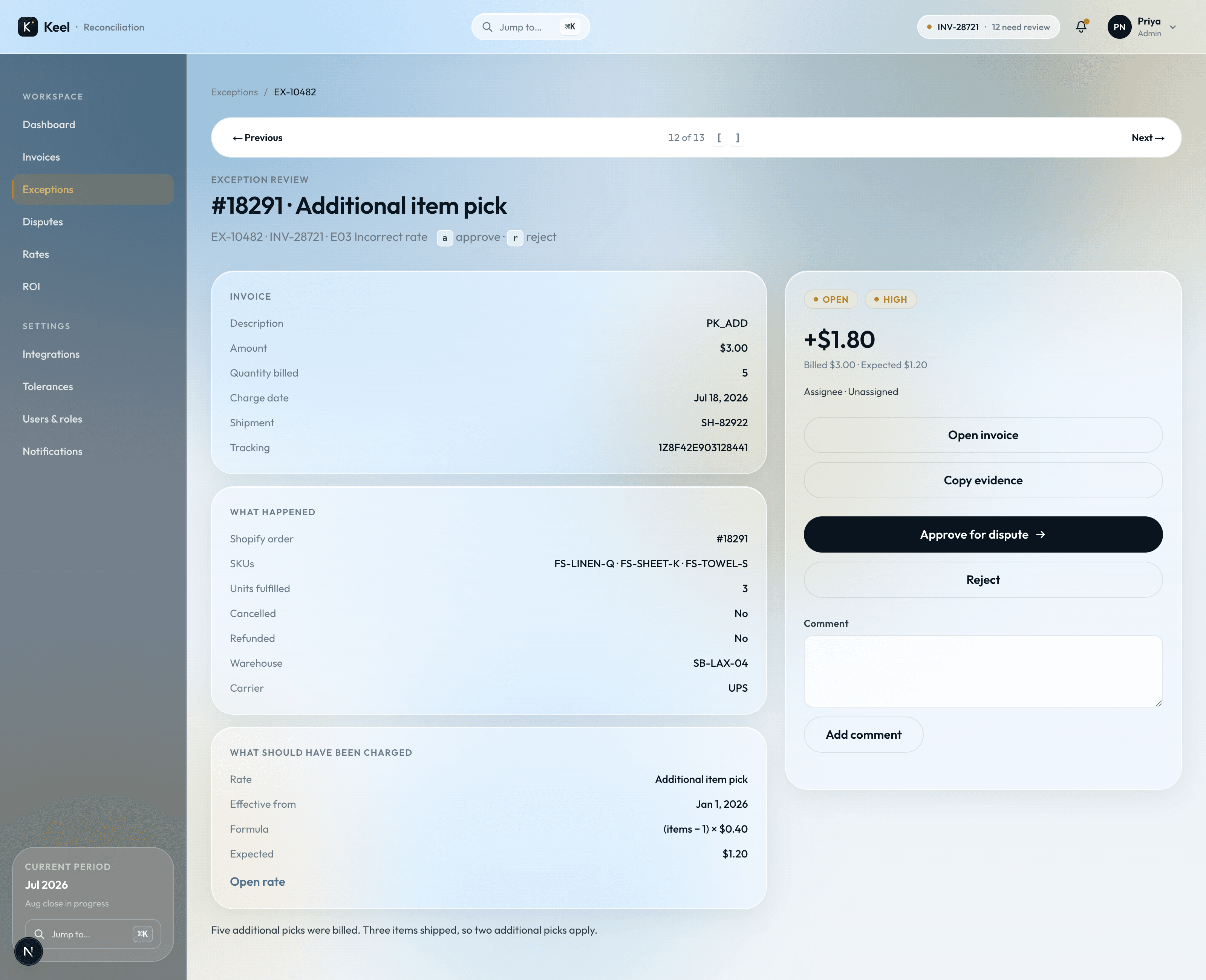
Separating genuine overcharges from missing information
A difference between billed and expected amounts did not automatically become a dispute. It could represent an incorrect rate, a duplicate charge, an operational event that never occurred—or simply a gap in the contract or source data.
Keel classified the reason before asking somebody to act. A confident discrepancy could move to review, while missing rules and unmatched records stayed with the team for clarification rather than being presented as money owed.
Finance saw which differences were ready to review and which ones first needed better information.
From an approved finding to a documented recovery
Approved discrepancies were grouped into a dispute package with the relevant invoice lines and supporting evidence attached. The package could be exported as a spreadsheet with a ready-to-send explanation for the 3PL.
Keel kept potential, approved, disputed and credited amounts separate. Finance recorded a recovery only when the credit actually arrived, so the platform’s reporting reflected completed outcomes rather than every amount it had flagged.
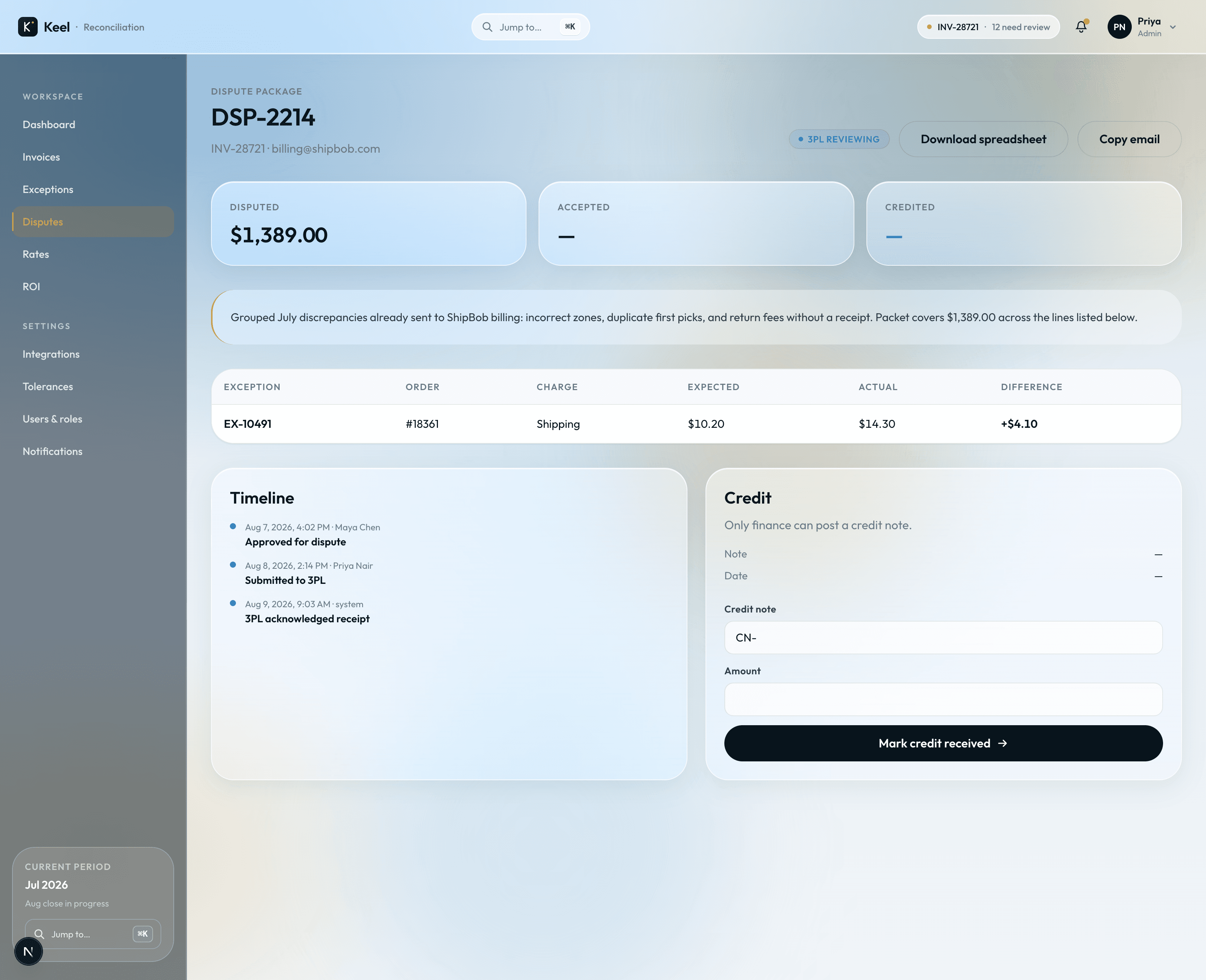
After: a short queue replaced a full-invoice investigation
The delivered workflow checked every invoice line while keeping a person in control of each dispute. Routine charges could clear without attention, and reviewers received a focused queue containing the evidence needed to make a decision.
Once approved, those decisions moved into consistent dispute packages and remained visible until finance recorded the final credit.
- Before
- Spot-check a large invoice and investigate discrepancies across separate records.
- After
- Review a focused queue, approve supported findings and track the resulting credits.
Finance no longer had to search for the problem before it could decide what to do about it.